Flagship Stores: Fixtures

Updated: May 6
Part of our “Future of Experiential Retail Design” series
This article explores how flagship concepts are adapted across markets while maintaining brand integrity and budget control.
👉 Start here: Discover the art and magnitude of a flagship store
👉 Continued Reading: Learn how we recreated a flagship from the UK to the US
Flagship stores are more than physical locations—they’re brand statements.
For retailers and consumer brands, a flagship store represents the most complete, immersive expression of who they are. It’s where brand values, visual language, and customer experience converge in a way that can’t be replicated online. And at the center of that experience? Custom fixtures.
At DisplayIt, we’ve designed, engineered, and built flagship environments across industries—from apparel and beauty to lifestyle and B2B showrooms. To better understand how fixtures shape brand identity inside these spaces, we sat down with Rochelle Lozano, Lead Designer at DisplayIt, to talk about the role materials, form, lighting, and spatial strategy play in bringing a brand to life.
What emerged is a clear truth: in a flagship store, fixtures are never just functional. They are strategic tools for storytelling.

Why Flagship Stores Matter More Than Ever
In an era dominated by ecommerce, the physical store has evolved. Customers don’t visit flagship locations simply to purchase—they come to experience the brand.
A flagship store often sets the visual and emotional standard for every other retail environment that follows. It becomes the reference point—the space that defines how the brand should look, feel, and function everywhere else.
“Brands that invest in flagship stores are brands that deeply care about their story,” Rochelle explains. “They’re thinking beyond sales and focusing on how people connect with them.”
That connection is built through intention—especially in the fixtures that shape how customers move through, interact with, and remember the space.

Fixtures as Storytelling Devices
In flagship environments, every fixture is an opportunity to communicate something meaningful about the brand. That storytelling starts with materials.
Take DisplayIt’s work for Stanley/Stella, a European leader in premium, sustainable apparel. Their first U.S. showroom—while technically an office location—functions as a flagship experience for the brand.
“They were very intentional about sustainability,” Rochelle notes. “Not just in what the space looked like, but in how it was built.”
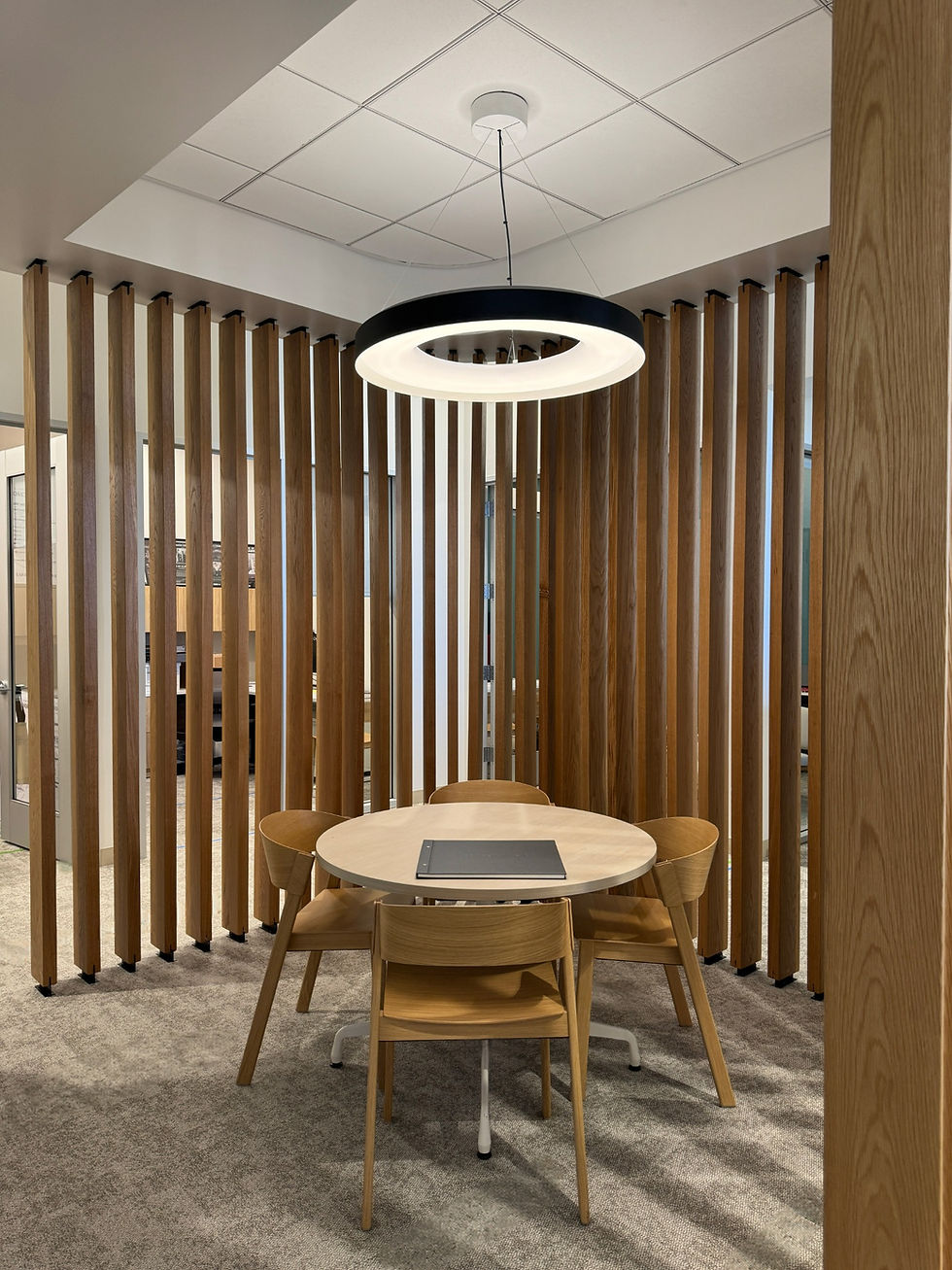
Custom fixtures were designed using responsibly sourced woods, recycled glass, and low-emission finishes—materials that mirrored the brand’s commitment to environmentally conscious practices. Even the stone surfaces were selected for their recycled composition, made from reclaimed glass and shell.
“These details may not be obvious to every visitor,” Rochelle says, “but they’re felt. Authenticity always comes through.”
In flagship stores, that authenticity matters. Customers can sense when materials and craftsmanship align with brand values—and when they don’t.

Translating Brand Language Into Physical Form
Beyond materials, form and geometry play a major role in defining brand identity.
For Stanley/Stella, the brand’s soft curves and minimalist logo were subtly integrated into fixture design—from rounded garment racks to gently curved millwork details. Hardware was intentionally concealed, allowing the fixtures to feel natural, refined, and understated.
“It’s about carrying the brand’s design language into the physical space. You don’t want fixtures that compete with the product. You want them to support it.”
This philosophy is especially important in flagship environments, where the store itself becomes part of the brand’s visual system.

Designing for Flow, Not Just Display
One of the most strategic roles fixtures play in a flagship store is guiding how people move through the space.
At DisplayIt, fixture design is always informed by traffic flow, sightlines, and behavior. This was especially evident in the Sokit flagship project.
Originally, the store layout included dead zones—areas customers passed through without engaging. DisplayIt reimagined those spaces with custom fixtures designed to encourage pause, interaction, and content creation.
“We identified an underutilized area and turned it into a feature moment. Instead of just walking through it, people stop. They take photos. They create content.”
That fixture—designed with influencers in mind—has since become a recognizable visual moment for the brand, extending its reach far beyond the store walls through social media.
Other strategic fixture decisions, like replacing a large rectangular table with a circular one, were made to encourage natural movement.
“A round table invites you to walk around it,” Rochelle says. “It opens up the space and creates a more intuitive flow.”
In flagship stores, these design choices are subtle—but powerful.

Lighting as an Extension of Brand Identity
Lighting is another critical element where fixtures help define a flagship experience.
“Lighting absolutely affects how a brand is perceived. Some brands want bright, open, natural light. Others want something darker, more immersive.”
Custom fixtures often integrate lighting directly—whether through backlit panels, diffused glass, or accent illumination—ensuring consistency across the space.
At Sokit, lighting was refined between locations to create a more cohesive brand experience, addressing inconsistencies that existed in earlier stores. The result was a flagship environment that felt intentional, polished, and unmistakably on-brand.
In flagship design, lighting doesn’t just showcase products—it reinforces mood, tone, and identity.

Flagship Stores as the Blueprint for Expansion
One of the most important roles a flagship store plays is serving as a design reference for future locations. From Rochelle’s experience, brands rarely treat their flagship as a one-off.
“When a brand invests in a flagship, they usually carry that design language into their other stores,” she explains. “It becomes the standard.”
This is especially evident in brands like Roark, where DisplayIt helped bring a deeply narrative-driven flagship environment to life.
Each Roark store draws inspiration from the brand’s annual expedition trips, incorporating found objects, custom fixtures, and location-specific details. In the Irvine location, even the exterior signage features a topographic map inspired by a local hiking trail.
“These are Easter eggs. Most people won’t consciously notice them, but they add depth and authenticity to the experience.”
That same storytelling language—fixtures, materials, proportions—then informs Roark’s other locations, ensuring consistency while allowing for local interpretation.

When Fixtures Do More Than Hold Product
In the most successful flagship stores, fixtures go beyond display. They become interactive moments, brand symbols, and memory-makers.
Whether it’s a modular rack system designed for flexibility, a sculptural centerpiece that anchors the space, or a content-friendly feature built for social sharing, custom fixtures help transform a store into an experience.
“The best flagship stores make people feel like they’ve arrived somewhere special. Fixtures play a huge role in that.”

Designing Flagship Stores With Purpose
At DisplayIt, flagship store design is never about excess—it’s about intention.
Every fixture is designed, engineered, and built to support a larger brand story. From sustainable materials and refined detailing to thoughtful flow and immersive lighting, these elements work together to define identity in a way that’s both physical and emotional.
Because when done right, a flagship store doesn’t just showcase a brand—it becomes the brand.

Ready to Design Your Flagship?
Contact us at sales@displayitinc.com or schedule a call with our design team.


Comments