Flagship Trade Show Booths

Updated: May 7
Part of our “Future of Experiential Retail Design” series
This article explores how flagship trade show booths create immersive, high-impact brand experiences—designed to tell a story, drive engagement, and set the standard for every booth that follows.
👉 Start here: The Art of a Flagship Store
👉 Continued Reading: Learn why flagship store fixtures are critical to success
👉 Discover why our latest booth won an award: Next Level Apparel Wins Gold at Hermes
Trade Show Booths Are No Longer Temporary
For decades, trade show booths were treated as disposable marketing tools—built quickly, used briefly, and stored away without much thought for longevity or evolution. That approach no longer works.
Today’s most effective exhibits look and feel more like retail environments than temporary structures. They tell a story. They guide movement. They highlight hero products. And most importantly, they reflect a brand’s identity with intention.
At DisplayIt, this shift isn’t theoretical—we see it in every client conversation. Brands no longer ask, “How big can our booth be?” They ask, “How do we want people to feel when they walk in?”

Flagship Trade Show Booths Start With Intent, Not Square Footage
Every successful exhibit begins with a single question: Why are you here?
Rochelle Lozano, Lead Designer at DisplayIt, explains that the design process never starts with finishes or fixtures—it starts with understanding the event itself.
“The first thing I ask is what show they’re going to and what that show is trying to accomplish. Who’s attending? Who are their competitors? What’s the goal—sales, awareness, relationships?”
That intent informs everything that follows: layout, flow, messaging, and even material selection.
In retail design, there’s a clear understanding that not everything can be the hero. The same principle applies to exhibits.
“You can’t have everything be the main character,” Rochelle explains. “You need hierarchy. One or two hero moments, supported by everything else.”
This philosophy prevents exhibits from becoming cluttered or overwhelming—two of the biggest reasons attendees walk past booths without stopping.

Storytelling Is the Difference Between Being Seen and Being Remembered
A common mistake brands make is trying to show everything at once.
In Rochelle’s experience, many clients arrive with photos of past booths that were packed with product but lacked clarity.
“You look at it and it’s just a wall of stuff. There’s no organization, no messaging, no story. It doesn’t make you care.”
Storytelling changes that.
By organizing products, creating visual breaks, and layering messaging intentionally, the booth becomes a narrative instead of a warehouse. Retail brands understand this instinctively. The exhibit floor is now catching up.

Engineering the Experience So It Actually Works
Ambitious design means nothing if it can’t survive the realities of a trade show.
Eduardo Ibarra, Project Engineer at DisplayIt, spends his days translating creative concepts into structures that can be installed quickly, broken down efficiently, and reused safely across multiple shows.
“We’re always thinking about how it knocks down and goes back up. Wall panels, cam locks, pre-installed hardware—everything is designed to be fast and repeatable.”
This approach isn’t just about convenience—it’s about ROI.
Many clients attend five, ten, or even more events per year, each with different booth sizes. Modular engineering allows a single exhibit to scale up or down without losing brand continuity.
“If we built it originally, retrofitting it later is much easier,” Eduardo says. “We already know how it works.”
That’s a critical distinction brands often overlook when choosing a vendor.
Technology Is No Longer Optional
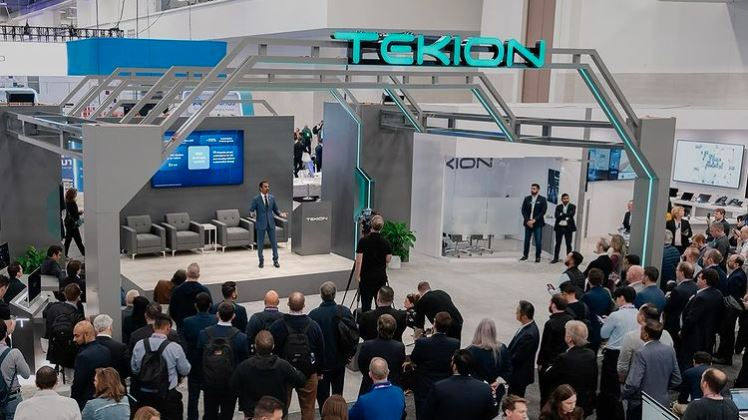
Modern exhibits are increasingly digital. LED tile walls, integrated monitors, and dynamic content are now expected—especially in technology, retail, and consumer-facing industries.
Eduardo notes that while these features were emerging pre-pandemic, adoption accelerated quickly afterward.
“LED tile walls were being talked about around 2019. Now they’re everywhere. It’s not just about looking cool—it’s about grabbing attention in a crowded space.”
Engineering technology directly into the structure—rather than treating it as an add-on—ensures cleaner aesthetics and better reliability.
Designing for Multiple Shows, Not One Moment
One of the biggest shifts in exhibit design is thinking long-term.
Rather than designing a booth for a single event, DisplayIt designs systems that evolve year after year. Rochelle describes it as designing for a roadmap, not a moment.
“Most clients are going to multiple shows, all different sizes. So we design everything to be modular. They can use all of it, some of it, or just a few pieces.”
This approach saves money, reduces waste, and builds brand recognition over time.

Why the Best Exhibits Feel Effortless
When an exhibit is well-designed, attendees don’t consciously notice why it works—it just does.
Flow feels natural. Messaging is clear. The space feels intentional rather than forced.
That’s not an accident.
It’s the result of aligning design intent, engineering discipline, and operational reality from day one.

The Exhibit Floor Is the New Brand Stage
Trade shows aren’t going away. In fact, as digital channels become noisier, physical experiences matter more than ever.
The brands that stand out aren’t the loudest—they’re the most intentional. And today, that intention looks a lot like retail.

Create an Exhibit That's Unforgettable
Read start planning your next trade show booth? Contact us at sales@displayitinc.com or schedule a call below.


Comments