Using Computational Design

Updated: May 6
Part of our “Future of Experiential Retail Design” series
This article dives into the technology behind modern retail environments.
👉 Start here: See how this comes to life in a real project
Retail environments are becoming more complex.
Brands are no longer asking for simple shelving systems or standard fixtures. They want immersive spaces, architectural features, and environments that feel custom-built to their identity.
But as design complexity increases, so does the challenge of bringing those ideas to life—quickly, accurately, and within budget.
That’s where computational design comes in.
And it’s why having a dedicated computational designer is quickly becoming a competitive advantage in experiential retail.

What Is Computational Design?
At its core, computational design is about using algorithms to generate and refine design solutions.
Instead of manually modeling every element in a space, designers create a system—a set of rules or parameters—that defines how those elements behave.
This allows them to:
automate repetitive design tasks
generate complex geometries
explore multiple design options quickly
maintain precision across an entire system
As DisplayIt’s computational designer, Cole Howell, explains, this approach allows designers to simulate a process rather than manually execute every step—dramatically improving speed and accuracy.
Rhino + Grasshopper, Explained Simply
At DisplayIt, computational design is powered by tools like Rhino and Grasshopper.
Rhino is a flexible 3D modeling platform used across architecture, product design, and fabrication
Grasshopper is a visual programming tool within Rhino that enables parametric and algorithmic design
Together, they allow designers to build logic into the design process. Instead of saying, “place this object here,” the designer defines:
how objects are spaced
how they respond to surfaces
how they change when inputs are adjusted
The result is a dynamic system that can update instantly.

The Sokit Example: Designing Complexity Without Slowing Down
A clear example of this approach can be seen in the Sokit retail project.
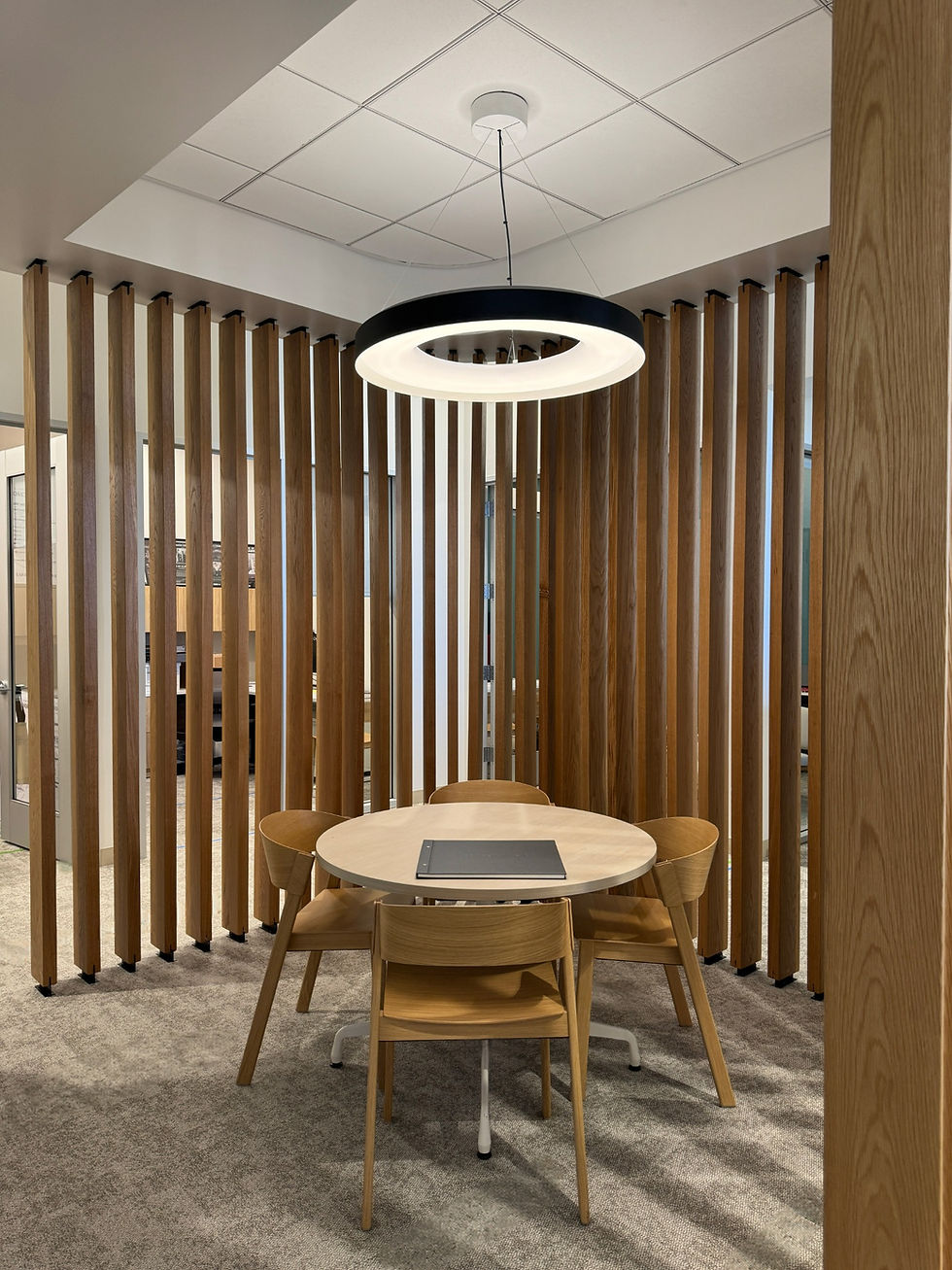
The store features a series of ribbed architectural elements that move across the space, creating rhythm and visual depth. While these structures appear seamless, they are made up of many individual components.
In a traditional workflow, each rib would need to be placed and adjusted manually—a time-consuming and error-prone process.
Using Grasshopper, DisplayIt created a system that:
analyzes selected surfaces
generates section cuts
automatically places ribs at defined intervals
Designers could then adjust parameters—like spacing or profile shape—and instantly regenerate the entire system.
What would have taken hours (or days) could now be done in minutes.

Real-Time Iteration with Clients
One of the most powerful advantages of computational design is the ability to design in real time.
Instead of sending revisions back and forth, designers can sit with clients and adjust the design live—changing geometry, proportions, or layouts while the client watches.
In one example, DisplayIt used a parametric system to generate multiple design iterations for a client in a single session. The client could review options, provide feedback, and refine the design on the spot.
The entire process—what might typically take multiple rounds of revisions—was completed in about an hour. For clients, this means:
faster decision-making
clearer visualization
greater confidence in the final design
Automating Engineering and Documentation
Computational design doesn’t stop at visualization.
At DisplayIt, these tools extend into engineering and production workflows.
Custom plugins developed in-house allow the team to:
generate fabrication-ready components
calculate material usage
create documentation automatically
produce CNC templates for manufacturing
In fact, these tools have reduced documentation time by approximately 30%, significantly improving project efficiency.

Connecting Design to Production
One of the biggest challenges in retail design is the disconnect between design and fabrication.
DisplayIt addresses this by integrating computational tools directly with its ERP system.
This means data generated during the design process—dimensions, materials, layouts—can flow directly into production systems without manual re-entry.
The result is:
fewer errors
faster handoffs
better alignment between teams
improved project timelines
Why Most Retail Firms Don’t Have This Capability
While computational design is common in architecture—particularly in façade and large-scale projects—it is still relatively rare in retail environments.
Most retail design firms rely on traditional modeling workflows, where:
design changes are manual
iteration cycles are slow
engineering and design operate separately
Bringing computational design into retail requires a unique combination of skills:
design expertise
programming knowledge
understanding of fabrication processes
That combination is not easy to find.

Why DisplayIt Is Ahead of the Curve
By investing in computational design, DisplayIt is bridging the gap between design, engineering, and fabrication.
This allows the team to:
take on more complex projects
iterate faster with clients
reduce production inefficiencies
deliver more precise, buildable designs
It also opens the door to new possibilities—creating forms and environments that would be difficult, if not impossible, to execute using traditional methods.
As retail continues to evolve, this type of integrated, technology-driven approach will become increasingly important.

The Future of Experiential Retail Design
Computational design isn’t replacing designers.
It’s enhancing what they’re capable of.
By automating repetitive tasks and enabling rapid iteration, it allows designers to focus on what matters most: creating meaningful, engaging environments that bring brands to life.
For companies that adopt it early, the advantage is clear. They can move faster, design smarter, and deliver better experiences.

Looking for Custom Designs, Displays or Fixtures?
You've come to the right place. Contact us at sales@displayitinc.com or use the button below to schedule a call with our team.


Comments